
The global financial markets closed out the final week of June 2026 with an exceptional display of diverging asset classes, driven by rapid geopolitical breakthroughs, evolving macroeconomic signals, and severe structural adjustments within highly-valued tech clusters. As the second quarter comes to a close, a powerful shift from a risk-aversion posture toward a highly selective, data-driven framework has caught multi-asset investors in a dramatic rebalancing act.
1.
Global Macroeconomic & Geopolitical Drivers
The single most definitive catalyst for market action this week
was the sudden "shedding of the geopolitical premium." Following reports that the United States
and Iran have signed a historic framework agreement to halt escalating Middle
East conflicts—cementing a comprehensive ceasefire for at least 60 days—the
intense safe-haven demand that gripped the earlier part of 2026 abruptly
evaporated.
This
geopolitical relief occurred simultaneously with sticky structural macro
indicators. In
the U.S., the headline PCE price index accelerated to 4.1%, keeping the Federal
Reserve on an aggressively data-driven, potentially hawkish path. Conversely, in emerging economies,
central bankers are navigating varying paths. In India, Reserve Bank of India (RBI)
Governor Sanjay Malhotra explicitly ruled out immediate interest rate hikes,
emphasizing that capital inflows from FCNR(B) deposits and External Commercial
Borrowings (ECBs) remain robust enough to defend the domestic currency without
knee-jerk monetary tightening.
2.
Commodity Markets: The Great Unwinding
No
sector felt the impact of the Middle East ceasefire framework more acutely than
commodities, which witnessed a simultaneous plunge across precious metals and
energy resources before experiencing structural rebounds later in the week.
·
Crude
Oil:
Brent Crude plummeted near $74/bbl, its lowest baseline since the onset of
intense regional hostilities, as supply disruption anxieties in the Strait of
Hormuz dissipated. However, supply chain normalization takes time; jet fuel
crack spreads remained elevated, jumping from $20/bbl to $50/bbl due to
localized inventory deficits.
·
Precious
Metals: Gold
experienced a dramatic correction, slipping below the $4,000/oz threshold for
the first time this year to trade around $3,970/oz early in the week before
stabilizing near $4,027/oz. High nominal global interest rates have
significantly altered the opportunity cost of holding non-yielding bullion,
prompting an aggressive unwinding of safe-haven hedges. Silver saw an even
steeper slide, down nearly 50% from its absolute January 2026 peak.
·
Industrial Metals & Softs: Copper bucked
the broader soft patch, reclaiming a 3-month high at $6.05 per pound due to
underlying global electrification demand and refined inventory tightness. Meanwhile, in agricultural commodities,
Cocoa continued its volatile ascent, posting a sharp single-day gain of 4.95%
to trade at $5,219 per ton.
3.
Equity Valuations and Technical Adjustments
Global equity indices experienced deep regional
divergences, largely defined by their mathematical exposure to heavily
concentrated artificial intelligence (AI) and semiconductor weightings.
·
The
Semiconductor Shock:
Mid-week, a severe valuation adjustment hit global hardware clusters. The South Korean KOSPI recorded a historic single-day crash
of 9.99% after MSCI opted to retain South Korea's status as an Emerging Market
(citing structural bottlenecks in Won liquidity), bypassing expectations of an
upgrade to Developed Market status. Concurrently,
European tech heavyweights collapsed, with STMicroelectronics shedding 7.3% and
Infineon down 5.4%.
·
U.S.
and Asian Resiliency:
Following the initial semiconductor shock, Wall Street and Japanese equities
initiated an aggressive technical rebound. The S&P 500 stabilized (+0.58%),
while the Nasdaq 100 bounced back with a 1.51% gain, showcasing a healthier,
broader earnings structure than prior concentrated surges. Japan's Nikkei 225
clawed back to settle around 71,020.
·
Indian
Equities & IT Rotation:
The India SENSEX showed strong defensive resilience, gaining over 1% to reach
76,991. Structurally, institutional asset allocation is rotating within the
Indian index. Wall Street heavyweights like JP Morgan
downgraded major IT firms including HCL Tech, Wipro, and Tata Technologies to
"Underweight," arguing that institutional buyers are demanding proof
of actual enterprise productivity from AI spending rather than pure capital
expenditure. However, defensive large-caps like TCS and Infosys remain
strongly supported.
4.
Fixed Income and Currencies
The bond markets signaled intense long-term inflationary
tracking, resulting in a widespread, synchronized sell-off of global sovereign
debt that forced yields significantly higher.
·
Sovereign
Yields: The U.S. and
European curve steepened as fixed-income investors priced in a
higher-for-longer rate environment driven by the 4.1% PCE print. In India, following Governor Malhotra's accommodative
reassurance, the domestic 10-year sovereign bond yield eased slightly by 5
basis points to settle at 6.82%.
·
Emerging
Market Vulnerabilities:
The true stress points surfaced in peripheral EM debt. Turkey's
10-year benchmark yield experienced an enormous spike of 246 to 250 basis
points, surging past 33.2%. Similar fiscal and currency pressures forced
Russia's 10-year yield up by 230 bps to 16.09%, and Brazil's 10-year up by 175
bps to 14.27%.
·
Foreign
Exchange: The Dollar
Index (DXY) preserved structural strength on the back of domestic macro data. The Indian Rupee traded under pressure near 94.57 per USD,
while the Brazilian Real and Mexican Peso clawed back minor gains to trade at
5.17 and 17.50 per USD, respectively.
5.
Technical Outlook & Concluding Thoughts
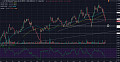
From a
technical chart perspective, the broad global indices are navigating critical
support thresholds. The rapid unwinding of the geopolitical risk premium has
stripped the froth out of the commodity complex, offering a cleaner baseline
for fundamental valuation. However, the extreme volatility observed in the
semiconductor and AI infrastructure ecosystem indicates that the market is
transitioning from "speculative momentum" to "earnings
justification."
Investors
should prioritize balanced, factor-controlled portfolios. Overweighting
high-yielding corporate debt or rotating into cash-flow-resilient, non-tech
equity sectors looks structurally prudent as we transition into the second half
of 2026.
Global
Market Snapshot
|
Asset Class |
Weekly
Level / Change |
Implications
for S&P 500 |
Implications for Nifty* |
|
S&P
500 |
7354, -1.95% |
Bearish |
Bearish |
|
Nifty |
24056, 0.18% |
Neutral
** |
Neutral |
|
China
Shanghai Index |
4027, -1.55% |
Bearish |
Bearish |
|
Gold |
4096, -1.84% |
Bearish |
Bearish |
|
WTIC
Crude |
69.23, -9.52% |
Bearish |
Bearish |
|
Copper |
6.21, -2.00% |
Bearish |
Bearish |
|
CRB Index |
352, -2.72% |
Bearish |
Bearish |
|
Baltic
Dry Index |
2524, -5.08% |
Bearish |
Bearish |
|
Euro |
1.1384, -0.69% |
Bearish |
Bearish |
|
Dollar/Yen |
161.76, 0.20% |
Neutral |
Neutral |
|
Dow
Transports |
21826, 0.87% |
Bullish |
Neutral |
|
Corporate
Bonds (ETF) |
109.50, 0.39% |
Neutral |
Neutral |
|
High-Yield
Bonds (ETF) |
96.22, -0.18% |
Neutral |
Neutral |
|
US
10-year Bond Yield |
4.37%, -2.58% |
Bullish |
Bullish |
|
NYSE
Summation Index |
251, 3.00% |
Bullish |
Bullish |
|
US Vix |
18.41, 9.71% |
Bearish |
Neutral |
|
S&P
500 Skew |
139 |
Neutral |
Neutral |
|
CNN Fear
& Greed Index |
Extreme Fear |
Bullish |
Neutral |
|
Nifty MMI
Index |
Greed |
Neutral |
Bearish |
|
20 DMA,
S&P 500 |
7455, Below |
Bearish |
Neutral |
|
50 DMA,
S&P 500 |
7363, Below |
Bearish |
Neutral |
|
200 DMA,
S&P 500 |
6903,
Above |
Bullish |
Neutral |
|
20 DMA,
Nifty |
23654, Above |
Neutral |
Bullish |
|
50 DMA,
Nifty |
23852, Above |
Neutral |
Bullish |
|
200 DMA,
Nifty |
24878,
Below |
Neutral |
Bearish |
|
S&P
500 P/E |
31.45 |
Bearish |
Neutral |
|
Nifty P/E |
20.75 |
Neutral |
Bearish |
|
India Vix |
13.05, 0.62% |
Neutral |
Bearish |
|
Dollar/Rupee |
94.36, 0.04% |
Neutral |
Neutral |
|
Overall |
S&P
500 |
Nifty |
|
|
Bullish
Indications |
5 |
4 |
|
|
Bearish
Indications |
12 |
12 |
|
|
Outlook |
Bearish |
Bearish |
|
|
Observation |
The
S&P500 fell, and the Nifty was unchanged last week. Indicators are bearish
for the week. Markets are topping. Watch those stops. |
||
|
On the
Horizon |
US – Employment data, UK – GDP |
||
|
*Nifty |
India’s
Benchmark Stock Market Index |
||
|
Raw Data |
Data
courtesy stockcharts.com, investing.com, multpl.com, nseindia.com,
tickertape.in, forexfactory.com |
||
|
**Neutral |
Changes
less than 0.5% are considered neutral |

The past week saw US equity
markets fall. Most emerging markets fell amid a declining interest-rate
environment. Transports rose. The Baltic Dry Index fell. The dollar rose. Most
commodities fell. Valuations are expensive, market breadth rose, and sentiment
is fearful. Volatility (S&P 500) rose. The “Sell in May and Go Away” trade
is playing out.
The critical levels to watch for
the week are 7365 (up) and 7340 (down) on the S&P 500 and 24150 (up) and 23950
(down) on the Nifty. A significant breach of the
above levels could trigger the next major move in these markets. High
beta/P/E will get torched again and is a sell on every rise. Gold
increasingly looks like the asset class to own over the next decade (currently
in a correction). Gold exploded, rising almost eightfold over the decade
following the dot-com bust in 2000. Imagine what would happen to gold when this
AI bubble bursts. You can check out last week’s report for a
comparison. I love your thoughts and feedback.
About the Author
Dr. Rajveer S. Rawlin holds a PhD and an MBA in Finance and serves
as an Associate Professor at CHRIST University. He has tracked capital markets
in both the US and India since 1993, specializing in macroeconomic cycles,
banking profitability metrics, and econometric investment analysis.
References
·
U.S. Macro & PCE Inflation Tracking:
Bureau of Economic Analysis (BEA). Personal Income and Outlays, June 2026
Metrics. Reports available at: bea.gov/data/income-saving/personal-income
·
Monetary Policy Framework & Capital
Flows: Reserve Bank of India (RBI). Official Communications &
Transcripts from Governor Sanjay Malhotra's Policy Briefings on FCNR(B) and
ECBs. Inquiries at: rbi.org.in
·
MSCI Country Classification Framework:
Morgan Stanley Capital International. Annual Market Accessibility Assessment
and South Korea Status Evaluation. Analysis logs at: msci.com/market-classification
·
Global Energy Metrics & Refined Product
Spreads: S&P Global Commodity Insights / Platts. Crude Oil
Benchmarks and Aviation-Grade Crack Spread Technical Performance Indexes.
Access at: spglobal.com/commodityinsights
·
Global Sovereign Bond Yields & FX
Dashboards: Bloomberg Terminal Services. Global Fixed Income Matrices
(US, Turkey 10Y, Russia 10Y, Brazil 10Y) & Foreign Exchange Spot Rates.
Data sets tracked via: bloomberg.com/markets/rates-bonds
·
Commodity Futures & Options Settlements:
Intercontinental Exchange (ICE) & London Bullion Market Association (LBMA).
Daily Historical Closing Data for Gold, Silver, LME Copper, and Cocoa
Contracts. Feeds available at: theice.com/products/Futures-Options
·
Asset Allocation Strategies and Multi-Asset
Portfolios: JP Morgan Global Equity Research. Technology Services,
Spend-Justification Models, and Institutional Re-ratings. For a deep-dive
comparison on navigating factor-controlled allocations and active fund
strategies during global macro shifts, see: Rajeev
Thakkar Exclusive: Best Bets, Flexi Cap Strategy & Market Outlook (Video
Discussion)










No comments:
Post a Comment