Ahead of the Curve: Stock Market Signals & Global Macro Outlook – Week of October 19, 2026
As third-quarter corporate earnings accelerate, global financial markets
are navigating hotter-than-expected inflation reports, fluctuating sovereign
bond yields, supply chain adjustments in energy, and sharp capital rotations
between growth and value sectors.
1. Global Macro Dynamics & Central Bank
Policy
- US
Fixed Income & Fed Policy: The
US 10-Year Treasury yield edges near 5.10%–5.12%, steadying after a
15 basis point decline last week. Recent hotter-than-expected US CPI and
PPI prints have heightened scrutiny of inflation. Speaking at the IMF
annual meetings in Bangkok, Fed Chair Warsh refrained from signaling rate
changes, reinforcing market expectations (~83% probability) that the FOMC
will hold rates steady at its upcoming meeting, while pricing a ~75%
chance of a 25 bps increase in December.
- Foreign
Exchange (FX) Markets:
- USD/JPY: Foreign exchange markets show the US Dollar holding firm against
the Yen, trading between 158.37 and 158.51, supported by US-Japan
yield differentials.
- EUR/USD: The Euro consolidates near 1.1211–1.1213, remaining capped
beneath medium-term exponential moving averages.
- DXY
Index: The US Dollar Index
retains upward momentum near 102.5–103.0, backed by resilient US
economic activity relative to European manufacturing contractions.
2. Commodities & Energy Markets
- Crude
Oil (Brent & WTI): Oil benchmark prices
remain elevated amid Strait of Hormuz supply concerns. Brent Crude trades
at $107.57–$108.06/bbl, slipping ~2% on news of potential Russian
supply waivers, while WTI Crude holds near $99.46/bbl.
- Gold
(XAU/USD): Spot gold trades around $4,145.09/oz.
Central bank official reserve purchases and systemic hedging continue to
provide structural support above $4,100/oz despite higher Treasury yields.
- Industrial
Metals (LME Copper): LME Copper trades in
the $9,850–$10,150/MT band, buoyed by long-term renewable energy
infrastructure demand while restricted by sluggish industrial growth in
Continental Europe.
3. Geopolitical Landscape & Structural
Risks
- Middle
East Shipping Corridors:
Maritime traffic disruptions around key energy transit choke points
maintain an embedded $8–$12 risk premium on crude contracts.
- Tech
Supply Chains & Trade Policies:
Fragmented industrial policies and restrictions on high-end semiconductors
continue to drive tech capital expenditure toward domestic and near-shore
supply redundancy.
- Fiscal
Deficit Pressures: Sustained sovereign
debt issuance across G7 economies keeps long-end real yields elevated,
restricting borrowing capacity for small- and mid-cap corporations.
4. Valuations & Q3 Earnings Setup
- S&P
500 Valuation: The S&P 500 carries a forward P/E
ratio near 22.9x, above its historical 10-year average (~18.2x).
Market concentration in top mega-cap tech stocks continues to elevate
top-line benchmark valuations.
- Q3
Earnings Divergence: Tech leaders show
strong year-over-year earnings momentum, contrasting with single-digit
aggregate growth across broader cyclical sectors coping with elevated
borrowing and labor costs.
- Market
Breadth: Concentration risk remains evident; tech
and growth rebounds contrast with pullbacks in smaller-cap indices like
the Russell 2000.
5. Technical Analysis & Key Market Levels
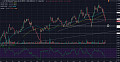
S&P 500 Index (SPX)
- Latest
Level: 7,699.54 – 7,700.40 (Previous
Close: 7,659.44)
- Technical
Stance: Primary trend remains constructively
bullish above its 50-day SMA, attempting to reclaim momentum toward
October peak highs (~7,818).
- Key
Levels:
- Resistance: 7,750 / 7,818 (October All-Time High)
- Support: 7,659 (Oct 16 Low) / 7,600 (50-day SMA)
Nasdaq Composite
- Latest
Level: 26,399.44 (Previous Close:
26,140.03)
- Technical
Stance: Surged 259 points (+0.99%) in Monday
trading, recovering after last week's 4.5% pullback led by AI
infrastructure spending concerns.
- Key
Levels:
- Resistance: 26,600 / 27,000
- Support: 26,140 / 25,800
Dow Jones Industrial Average (DJI)
- Latest
Level: 51,902.26 – 51,996.29 (Previous
Close: 52,002.41)
- Technical
Stance: Modest weakness as capital rotates from
defensive and value sectors back into growth and semiconductor stocks.
India Nifty 50
- Latest
Level: 22,888.95 (Down 257.20 pts /
-1.11% on Oct 19)
- Technical
Stance: Slips below 22,900 as banking and IT
equities drag domestic indices lower. Immediate support sits near 22,800,
with resistance near 23,150. BSE Sensex stands at 73,852.90.
6. Strategic Portfolio Framework
- Equities: Maintain a balanced barbell structure. Combine allocation in
high-cash-flow technology leaders with defensive, quality-value sectors
(Healthcare, Industrials, Financials) to mitigate high-multiple
volatility.
- Fixed
Income: Anchor income portfolios in high-quality
4-to-6 year investment-grade bond instruments yielding 5.10%+,
locking in attractive real yields.
- Commodities: Keep a allocation to Gold (~$4,145/oz) to hedge against
geopolitical friction, supply chain shocks, and currency debasement.
Global Market Snapshot
|
Asset Class / Benchmark |
Latest Price / Level |
Recent Trend |
Stance / Key Drivers |
|
S&P 500 Index |
7,700.40 |
Rebounding (+0.53%) |
Holding support above 7,650; Q3 tech earnings in focus. |
|
Nasdaq Composite |
26,399.44 |
Rebound (+0.99%) |
AI and chipmakers rebound after last week's 4.5% dip. |
|
Dow Jones Industrial |
51,902.26 |
Consolidating (-0.19%) |
Profit-taking in energy/defensives as funds shift to tech. |
|
US 10-Yr Treasury Yield |
5.10% – 5.12% |
Edging Higher |
Fed hold expected near-term; hot CPI/PPI data. |
|
USD/JPY |
158.37 – 158.51 |
Strong USD |
Yield differentials support dollar strength. |
|
EUR/USD |
1.1211 – 1.1213 |
Neutral Consolidation |
Subdued European growth keeps euro capped. |
|
Brent Crude Oil |
$107.57 / bbl |
Elevated |
Hormuz geopolitical tensions maintain price floor. |
|
Gold (XAU/USD) |
$4,145.09 / oz |
Robust Floor |
Structural support from central bank buying. |
|
India Nifty 50 |
22,888.95 |
Pullback (-1.11%) |
Dragged by heavyweights; testing key 22,800 floor. |
Observation
The global market landscape demonstrates a swift sectoral tug-of-war. After
tech equities underwent a notable retrenchment last week, opening sessions this
week show aggressive buy-the-dip activity in semiconductors and AI supply-chain
leaders. Meanwhile, fixed income yields remain sticky around 5.10%+, crude oil
remains elevated near $107/bbl, and gold remains firmly bid above $4,100/oz.
Strategic discipline remains imperative as earnings reports roll out over the
coming weeks.
Global Market Detailed Snapshot
|
Asset Class |
Weekly
Level / Change |
Implications
for S&P 500 |
Implications for Nifty* |
|
S&P
500 |
7659, -1.95% |
Bearish |
Bearish |
|
Nifty |
23146, 2.78% |
Neutral
** |
Bullish |
|
China
Shanghai Index |
3716, -2.56% |
Bearish |
Bearish |
|
Gold |
4187, -0.70% |
Bearish |
Bearish |
|
WTIC
Crude |
99.02, 7.81% |
Bullish |
Bullish |
|
Copper |
6.56, -1.97% |
Bearish |
Bearish |
|
CRB Index |
420, 1.23% |
Bullish |
Bullish |
|
Baltic
Dry Index |
2511, -13.92% |
Bearish |
Bearish |
|
Euro/Dollar |
1.1239, 0.33% |
Neutral |
Neutral |
|
Dollar/Yen |
158.00, -0.21% |
Neutral |
Neutral |
|
Dow
Transports |
19880, 0.38% |
Neutral |
Neutral |
|
Corporate
Bonds (ETF) |
103.40, 0.97% |
Bullish |
Bullish |
|
High-Yield
Bonds (ETF) |
92.28, -0.59% |
Bearish |
Bearish |
|
US
10-year Bond Yield |
5.10%, -2.78% |
Bullish |
Bullish |
|
NYSE
Summation Index |
-723, 8.00% |
Bullish |
Neutral |
|
US Vix |
19.99, 34.70% |
Bearish |
Bearish |
|
S&P
500 Skew |
169 |
Bearish |
Neutral |
|
CNN Fear
& Greed Index |
Extreme
Fear |
Bullish |
Neutral |
|
Nifty MMI
Index |
Fear |
Neutral |
Bullish |
|
20 DMA,
S&P 500 |
7739, Below |
Bearish |
Neutral |
|
50 DMA,
S&P 500 |
7706, Below |
Bearish |
Neutral |
|
200 DMA,
S&P 500 |
7271,
Above |
Bullish |
Neutral |
|
20 DMA,
Nifty |
22841,
Above |
Neutral |
Bullish |
|
50 DMA,
Nifty |
23549,
Below |
Neutral |
Bearish |
|
200 DMA,
Nifty |
24191,
Below |
Neutral |
Bearish |
|
S&P
500 P/E |
26.12 |
Bearish |
Neutral |
|
Nifty P/E |
19.77 |
Neutral |
Neutral |
|
India Vix |
14.06, -2.17% |
Neutral |
Bullish |
|
Dollar/Rupee |
95.24, -1.59% |
Neutral |
Bullish |
|
Overall |
S&P
500 |
Nifty |
|
|
Bullish
Indications |
7 |
9 |
|
|
Bearish
Indications |
11 |
9 |
|
|
Outlook |
Bearish |
Neutral |
|
|
Observation |
The
S&P500 fell, and the Nifty rose last week. Indicators are bearish for the
week. Markets are topping. Watch those stops. |
||
|
On the
Horizon |
China – GDP, UK – CPI |
||
|
*Nifty |
India’s
Benchmark Stock Market Index |
||
|
Raw Data |
Data
courtesy stockcharts.com, investing.com, multpl.com, nseindia.com,
tickertape.in, forexfactory.com |
||
|
**Neutral |
Changes
less than 0.5% are considered neutral |

The past week saw US equity
markets fall. Most emerging markets fell even as interest rates fell.
Transports were unchanged. The Baltic Dry Index fell. The dollar was unchanged.
Most commodities rose. Valuations are expensive, market breadth rebounded, and
sentiment is fearful. Volatility (S&P 500) rose. The market is forming an
important top and getting ready for the October swoon, as the oversold bounce that
started has now completed with nominal divergent highs.
The critical levels to watch for
the week are 7670 (up) and 7645 (down) on the S&P 500 and 23250 (up) and 23050
(down) on the Nifty. A significant breach of the
above levels could trigger the next major move in these markets. High
beta/P/E will get torched again and is a sell on every rise. Gold
increasingly looks like the asset class to own over the next decade. Gold
exploded, rising almost eightfold over the decade following the dot-com bust in
2000. Imagine what would happen to gold when this AI bubble bursts. You
can check out last week’s report for a comparison. I love your thoughts and
feedback.
About the Author
Dr. Rajveer S. Rawlin holds a PhD and an MBA in Finance and serves
as an Associate Professor at CHRIST University. He has tracked capital markets
in both the US and India since 1993, specializing in macroeconomic cycles,
banking profitability metrics, and econometric investment analysis.
References & Sources
· Trading Economics Market Data (October
19, 2026): US
10-Year Treasury Yield Snapshot (5.10%–5.12%) & Fed Rate Policy
Expectations;
· S&P
Dow Jones Indices & Investing.com (October 16–19, 2026): S&P 500 Index Historical Close (7,659.44) and
Intra-day Levels (7,699.54).
· HDFC
Sky Capital Market Coverage (October 19, 2026): US Equity Opening Performance:
Nasdaq Composite (26,399.44), Dow Jones (51,902.26), and S&P 500 (7,700.40).
· Zacks
Investment Research Market Report (October 19, 2026): Wall Street Benchmarks Overview, Volatility Index VIX
(19.99), and Dow Jones Close (52,002.41).
· Quick
Loan Arena & Sunday Guardian Energy Intelligence (October 19, 2026): Brent Crude ($107.57/bbl) and
WTI Crude ($99.46/bbl) Price Snapshots.
· Liquide
& NSE India Financial Reports (October 19, 2026): Nifty 50 Closing Level
(22,888.95) and BSE Sensex (73,852.90) Review.
· Foreign
Exchange Spot Data (October 19, 2026):
EUR/USD Currency Pair
(1.1211–1.1213) & USD/JPY Exchange Rate (158.37–158.51).
Disclaimer: The views expressed in this post are
strictly for educational and informational purposes and do not constitute
financial or investment advice. Always conduct independent research before
making market decisions. Part of the post is written with AI assistance.