As third-quarter corporate earnings accelerate, global financial markets are navigating a complex intersection of resilient economic growth, sticky energy inflation, and intense scrutiny over artificial intelligence capital expenditures. Cross-asset indicators point to a market recalibrating valuations against a backdrop of elevated sovereign yields and active central bank policy deliberations.
1.
Global Macro Dynamics & Central Bank Policy
US
Fixed Income & Fed Policy
The
benchmark U.S. 10-Year Treasury yield closed the session at 5.00%, stabilizing near the
critical psychological handle after hovering between 4.98% and 5.12% earlier in
the week. The U.S. 2-Year Treasury yield sits at 4.69%, keeping the 10Y-2Y yield curve positive at +31 basis points. With the
Federal Open Market Committee (FOMC) approaching its rate decision alongside
upcoming U.S. PCE inflation data, interest rate futures continue to price in a
cautious policy pause, though elevated sticky inflation metrics keep terminal
rate discussions active. In Europe, sovereign yields remain elevated, with the
UK 10-Year Gilt yield at 5.32%
and the German 10-Year Bund yield at 3.35%.
Foreign
Exchange (FX) Markets
·
USD/JPY: Trading at 157.52, underpinned by the substantial U.S.-Japan
yield differential as the Bank of Japan maintains a gradual normalization
trajectory with 10-Year JGB yields near 2.79%.
·
EUR/USD: Consolidating at 1.1180, capped beneath its
medium-term exponential moving averages as European economic momentum continues
to trail U.S. output.
·
GBP/USD: Trading at 1.3343, holding firm due to persistent service-sector
inflation in the United Kingdom.
·
DXY Index: The U.S. Dollar Index holds firm at 102.00, supported by
relative macroeconomic outperformance and cautious safe-haven flows.
2.
Commodities & Energy Markets
Crude
Oil (Brent & WTI)
Energy
markets remain a primary channel of supply-side inflation risk. Brent Crude is
trading at $115.08/bbl, while
WTI Crude stands at $101.08/bbl.
Ongoing maritime transit friction, supply-route rerouting, and geopolitical
uncertainty around major Middle Eastern transport bottlenecks continue to embed
a persistent risk premium into global energy contracts.
Precious
& Industrial Metals
·
Spot Gold
(XAU/USD): Holds strong
at $4,023.51/oz,
reflecting robust structural demand from central bank reserve diversification
and hedging against fiscal debt expansion, despite real yield pressures.
·
Spot Silver: Trading at $54.18/oz, benefiting from dual demand streams across
industrial solar PV manufacturing and safe-haven accumulation.
·
LME Copper: Anchored at $6.50/lb ($14,330/MT),
driven by long-term grid electrification and renewable infrastructure spending
offsetting sluggish traditional manufacturing activity.
3.
Geopolitical Landscape & Structural Risks
·
Supply Chain
& Freight Costs:
Freight rates and maritime insurance premiums remain elevated across primary
trade corridors, increasing input costs for downstream global manufacturing
sectors.
·
AI Capital
Expenditure Validation:
As mega-cap technology firms report Q3 results (Alphabet, Microsoft, Amazon,
Meta), market attention has shifted from infrastructure expansion announcements
to operational monetization and revenue conversion.
·
Fiscal
Deficits & Debt Issuance:
Elevated sovereign debt issuance across G7 economies is maintaining term
premiums at multi-year highs, creating ongoing borrowing headwinds for
interest-rate-sensitive real estate and cyclical sectors.
4.
Valuations & Q3 Earnings Setup
·
S&P 500
Index Multiples: The
S&P 500 trades at 7,700.67
(with recent intraday ranges spanning 7,623.68 to 7,757.17). At current levels,
the benchmark carries an elevated forward P/E ratio above historical 10-year
averages (~18.2x).
·
Market
Breadth & Rotational Dynamics:
Broad market breadth shows a notable rotation. While large-cap mega-tech
companies face higher hurdle rates, value-oriented and small-cap segments have
demonstrated resilient relative performance.
·
Earnings
Margins: Corporate
disclosures highlight net margin resilience as the key driver of stock price
outperformance, with markets penalizing firms unable to pass along wage and
energy input costs.
5.
Technical Analysis & Key Market Levels
|
Asset
/ Instrument |
Current
Level |
Primary
Support Zone |
Immediate
Resistance Zone |
14-Day
RSI / Technical Stance |
|
S&P 500 (SPX) |
7,700.67 |
7,612.00 |
7,757.17 |
56
(Neutral-to-Bullish) |
|
USD/JPY |
157.52 |
156.80 |
159.04 |
58
(Consolidating Uptrend) |
|
EUR/USD |
1.1180 |
1.1110 |
1.1280 |
47 (Slightly
Bearish Bias) |
|
Brent Crude |
$115.08/bbl |
$108.50/bbl |
$120.00/bbl |
63 (Bullish
Momentum) |
|
Spot Gold |
$4,023.51/oz |
$3,950.00/oz |
$4,100.00/oz |
61 (Strong
Structural Floor) |
6.
Strategic Portfolio Framework
1. Duration
Management in Fixed Income:
Secure high-grade intermediate sovereign and corporate paper near 5.00% yields
to lock in real cash flows against potential macroeconomic growth
decelerations.
2. Equity
Diversification:
Rebalance portfolios from heavy single-sector mega-cap concentration toward
equal-weighted benchmark exposures, high-quality value factors, and strong
balance sheet dividend growers.
3. Inflation
& Real Asset Hedging:
Maintain tactical allocations to energy instruments, precious metals, and
industrial commodities to shield investment portfolios against supply-side
commodity price spikes.
Global Market Detailed Snapshot
|
Asset Class |
Weekly
Level / Change |
Implications
for S&P 500 |
Implications for Nifty* |
|
S&P
500 |
7624, -0.47% |
Neutral |
Neutral |
|
Nifty |
22600, -2.36% |
Neutral
** |
Bearish |
|
China
Shanghai Index |
3691, -0.69% |
Bearish |
Bearish |
|
Gold |
4010, -4.09% |
Bearish |
Bearish |
|
WTIC
Crude |
103.44, 4.46% |
Bullish |
Bullish |
|
Copper |
6.50, -1.12% |
Bearish |
Bearish |
|
CRB Index |
419, -0.29% |
Neutral |
Neutral |
|
Baltic
Dry Index |
2660, 5.93% |
Bullish |
Bullish |
|
Euro/Dollar |
1.1203, -0.33% |
Neutral |
Neutral |
|
Dollar/Yen |
156.84, -0.74% |
Bearish |
Bearish |
|
Dow
Transports |
20042, 0.82% |
Bullish |
Neutral |
|
Corporate
Bonds (ETF) |
103.85, 0.44% |
Neutral |
Neutral |
|
High-Yield
Bonds (ETF) |
92.52, 0.26% |
Neutral |
Neutral |
|
US
10-year Bond Yield |
4.99%, -2.16% |
Bullish |
Bullish |
|
NYSE
Summation Index |
-621, 14.00% |
Bullish |
Neutral |
|
US Vix |
19.45, -2.70% |
Bullish |
Bullish |
|
S&P
500 Skew |
152 |
Bearish |
Neutral |
|
CNN Fear
& Greed Index |
Extreme Fear |
Bullish |
Neutral |
|
Nifty MMI
Index |
Fear |
Neutral |
Bullish |
|
20 DMA,
S&P 500 |
7728, Below |
Bearish |
Neutral |
|
50 DMA,
S&P 500 |
7700, Below |
Bearish |
Neutral |
|
200 DMA,
S&P 500 |
7291,
Above |
Bullish |
Neutral |
|
20 DMA,
Nifty |
22714, Below |
Neutral |
Bearish |
|
50 DMA,
Nifty |
23404,
Below |
Neutral |
Bearish |
|
200 DMA,
Nifty |
24125,
Below |
Neutral |
Bearish |
|
S&P
500 P/E |
26.01 |
Bearish |
Neutral |
|
Nifty P/E |
19.05 |
Neutral |
Neutral |
|
India Vix |
16.86, 19.89% |
Neutral |
Bearish |
|
Dollar/Rupee |
95.20, 0.25% |
Neutral |
Neutral |
|
Overall |
S&P
500 |
Nifty |
|
|
Bullish
Indications |
8 |
5 |
|
|
Bearish
Indications |
8 |
9 |
|
|
Outlook |
Neutral |
Bearish |
|
|
Observation |
The
S&P 500 and the Nifty fell last week. Indicators are mixed for the
week. Markets are about to correct. Watch those stops. |
||
|
On the
Horizon |
US – FOMC
rate decision, GDP, Eurozone – ECB rate decision, Japan – BOJ
rate decision |
||
|
*Nifty |
India’s
Benchmark Stock Market Index |
||
|
Raw Data |
Data
courtesy stockcharts.com, investing.com, multpl.com, nseindia.com,
tickertape.in, forexfactory.com |
||
|
**Neutral |
Changes
less than 0.5% are considered neutral |

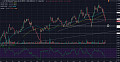
The past week saw US equity
markets fall. Most emerging markets fell even as interest rates fell.
Transports rose. The Baltic Dry Index rose. The dollar was unchanged. Most
commodities fell. Valuations are expensive, market breadth rebounded, and
sentiment is fearful. Volatility (S&P 500) fell. The market is forming an
important top and getting ready for the fall swoon, as the oversold bounce that
started has now completed with nominal divergent highs.
The critical levels to watch for
the week are 7635 (up) and 7610 (down) on the S&P 500 and 22700 (up) and 22500
(down) on the Nifty. A significant breach of the
above levels could trigger the next major move in these markets. High
beta/P/E will get torched again and is a sell on every rise. Gold
increasingly looks like the asset class to own over the next decade. Gold
exploded, rising almost eightfold over the decade following the dot-com bust in
2000. Imagine what would happen to gold when this AI bubble bursts. You
can check out last week’s report for a comparison. I love your thoughts and
feedback.
About the Author
Dr. Rajveer S. Rawlin holds a PhD and an MBA in Finance and serves
as an Associate Professor at CHRIST University. He has tracked capital markets
in both the US and India since 1993, specializing in macroeconomic cycles,
banking profitability metrics, and econometric investment analysis.
References & Sources
· Federal
Reserve Bank of St. Louis (FRED): Daily S&P 500 Index Data (Series:
SP500, Oct 2026) & U.S. Treasury Yield Curve Statistics.
·
Trading Economics: Global Commodity Prices (Brent,
WTI, Gold, Silver, Copper) & Foreign Exchange Spot Quotes (EUR/USD,
USD/JPY, GBP/USD, DXY) (Data updated October 26, 2026).
·
YCharts & Advisor Perspectives: U.S. 10-Year and
2-Year Treasury Yield Snapshots (October 23–26, 2026).
·
S&P Dow Jones Indices & Investing.com:
Benchmark Historical Performance and Valuation Context.
Disclaimer: The views expressed in this post are
strictly for educational and informational purposes and do not constitute
financial or investment advice. Always conduct independent research before
making market decisions. Part of the post is written with AI assistance.