About

Ahead of the Curve provides analysis and insight into today's global financial markets. The latest news and views from global stock, bond, commodity, and FOREX markets are discussed. Rajveer Rawlin is a PhD and received his MBA in finance from the Cardiff Metropolitan University, Wales, UK. He is an avid market watcher, having followed capital markets in the US and India since 1993. His research interests include capital markets, banking, investment analysis, and portfolio management, and he has over 20 years of experience in the above areas, covering the US and Indian markets. He has several publications in the above areas. He currently teaches business and management students at CHRIST University. The views expressed here are his own and should not be construed as advice to buy or sell securities.

Featured post

Time Series Analysis with GRETL

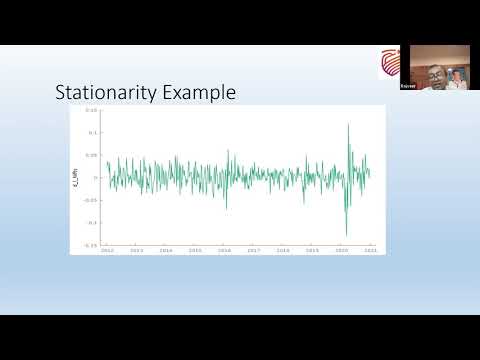
This video shows key time-series analyses techniques such as ARIMA, Granger Causality, Co-integration, and VECM performed via GRETL. Key dia...

Monday, 24 November 2025

Market Signals for the US stock market S and P 500 Index and Indian Stock Market Nifty Index for the Week beginning November 24


Asset Class

Weekly Level / Change

Implications for S&P 500

Implications for Nifty*

S&P 500

6603, -1.95%

Bearish

Bearish

Nifty

26068, 0.61%

Neutral **

Bullish

China Shanghai Index

3835, -3.90%

Bearish

Bearish

Gold

4116, 0.53%

Bullish

Bullish

WTIC Crude

57.81, -3.57%

Bearish

Bearish

Copper

5.10, 0.73%

Bullish

Bullish

CRB Index

296, -2.24%

Bearish

Bearish

Baltic Dry Index

2275, 7.06%

Bullish

Bullish

Euro

1.1513, -0.93%

Bearish

Bearish

Dollar/Yen

156.39, 1.19%

Bullish

Bullish

Dow Transports

16014, -0.36%

Neutral

Neutral

Corporate Bonds (ETF)

110.92, 0.61%

Bullish

Bullish

High-Yield Bonds (ETF)

96.76, 0.13%

Neutral

Neutral

US 10-year Bond Yield

4.06%, -2.05%

Bullish

Bullish

NYSE Summation Index

-145, -277.00%

Bearish

Neutral

US Vix

23.43, 18.15%

Bearish

Neutral

S&P 500 Skew

148

Bearish

Neutral

CNN Fear & Greed Index

Extreme Fear

Bullish

Neutral

Nifty MMI Index

Fear

Neutral

Bullish

20 DMA, S&P 500

6763, Below

Bearish

Neutral

50 DMA, S&P 500

6711, Below

Bearish

Neutral

200 DMA, S&P 500

6163, Above

Bullish

Neutral

20 DMA, Nifty

25844, Above

Neutral

Bullish

50 DMA, Nifty

25432, Above

Neutral

Bullish

200 DMA, Nifty

24500, Above

Neutral

Bullish

S&P 500 P/E

29.82

Bearish

Neutral

Nifty P/E

22.70

Neutral

Bearish

India Vix

13.63, 14.18%

Neutral

Bearish

Dollar/Rupee

89.64, 1.07%

Neutral

Bearish


Overall


S&P 500


Nifty


Bullish Indications

8

11

Bearish Indications

11

8


Outlook

Bearish

Bullish

Observation


The S&P fell and the Nifty rose last week. Indicators are mixed for the week.

Markets are topping. Watch those stops.

On the Horizon

Eurozone – German GDP, US – PPI, GDP.

*Nifty


India’s Benchmark Stock Market Index

Raw Data

Data courtesy stockcharts.com, investing.com, multpl.com, nseindia.com, tickertape.in

**Neutral

Changes less than 0.5% are considered neutral


The S&P fell, and the Nifty rose last week. Indicators are mixed for the week. Markets are topping and about to collapse after an oversold bounce. We are transitioning into a deflationary regime, and the risk of a recession has increased significantly. The sentiment is fearful. Carry trade liquidation is about to resume, and the S&P will likely find resistance soon. The macroenvironment was already deteriorating rapidly even before the recent tariff issue. The recent massive breakdown in transports (subsequent non-conformation for a possible third time) is quite ominous. Divergences galore. This, combined with oil's recent free fall, has profound recessionary implications. The Nifty has corrected significantly from its recent highs and is likely to underperform in the near future.

The past week saw US equity markets fall. Most emerging markets fell despite rising rates. Transports were unchanged. The Baltic Dry Index rose. The dollar rose. Commodities fell. Valuations are expensive, market breadth fell, and the sentiment is fearful. Volatility (S&P 500) rose.

A currency crisis should resume at any moment and push risky assets to new lows. Deflation is in the air, and bonds are telegraphing just that despite intermittent spikes in yields. It feels like a 2008-style recession trade has begun, with a potential for a decline in risk assets across the board. The current market is closely tracking the 2000 moves down in the S&P 500, implying a panic low is right ahead in the upcoming months. (My views do not matter; kindly pay attention to the levels.) A dollar rally is a likely catalyst.

The S&P 500 is correcting from recent highs. We have bounced from recent lows without capitulation. This suggests the lows may not be in, and the regime has changed from buying the dip to selling the rip. We may get a final flush down soon. Risky assets are likely to continue breaking to the downside as earnings growth falters. The Fed is now easing, anticipating a recession. Deflationary busts often begin after major inflationary scares. The Dollar is rebounding from major lows, while commodities and bond yields are flashing significant warning signs.

Global yield curves are steepening after having inverted a second time, reflecting the arrival of a significant economic slowdownThis is a precursor to the next recession, and the riskiest assets are likely to underperform in the future under such conditions. 

The critical levels to watch for the week are 6615 (up) and 6590 (down) on the S&P 500 and 26150 (up) and 25950 (down) on the Nifty. A significant breach of the above levels could trigger the next major move in these markets.  High beta/P/E will get torched again and is a sell on every rise. Gold increasingly looks like the asset class to own over the next decade (has gone parabolic of late and correcting). Gold exploded almost eight times higher over the decade following the dot-com bust in 2000. Imagine what would happen to gold when this AI bubble bursts. You can check out last week’s report for a comparison. I love your thoughts and feedback.


Monday, 17 November 2025

Market Signals for the US stock market S and P 500 Index and Indian Stock Market Nifty Index for the Week beginning November 17


Asset Class

Weekly Level / Change

Implications for S&P 500

Implications for Nifty*

S&P 500

6734, 0.08%

Neutral

Neutral

Nifty

25910, 1.64%

Neutral **

Bullish

China Shanghai Index

3991, -0.18%

Neutral

Neutral

Gold

4094, 2.10%

Bullish

Bullish

WTIC Crude

59.95, 0.33%

Neutral

Neutral

Copper

5.06, 2.14%

Bullish

Bullish

CRB Index

302, 0.48%

Neutral

Neutral

Baltic Dry Index

2125, 1.00%

Bullish

Bullish

Euro

1.1621, 0.48%

Neutral

Neutral

Dollar/Yen

154.55, 0.73%

Bullish

Bullish

Dow Transports

16073, -0.84%

Bearish

Neutral

Corporate Bonds (ETF)

110.25, -0.42%

Neutral

Neutral

High-Yield Bonds (ETF)

96.63, -0.13%

Neutral

Neutral

US 10-year Bond Yield

4.15%, 1.34%

Bearish

Bearish

NYSE Summation Index

82, 3.00%

Bullish

Bullish

US Vix

19.83, 3.93%

Bearish

Neutral

S&P 500 Skew

138

Neutral

Neutral

CNN Fear & Greed Index

Extreme Fear

Bullish

Neutral

Nifty MMI Index

Greed

Neutral

Bearish

20 DMA, S&P 500

6795, Below

Bearish

Neutral

50 DMA, S&P 500

6704, Above

Bullish

Neutral

200 DMA, S&P 500

6149, Above

Bullish

Neutral

20 DMA, Nifty

25750, Above

Neutral

Bearish

50 DMA, Nifty

25296, Above

Neutral

Bullish

200 DMA, Nifty

24425, Above

Neutral

Bullish

S&P 500 P/E

30.42

Bearish

Neutral

Nifty P/E

22.53

Neutral

Bearish

India Vix

11.94, -4.94%

Neutral

Bullish

Dollar/Rupee

88.69, 0.03%

Neutral

Neutral


Overall


S&P 500


Nifty


Bullish Indications

7

9

Bearish Indications

5

4


Outlook

Bullish

Bullish

Observation


The S&P was unchanged and the Nifty rose last week. Indicators are bullish for the week.

Markets are topping. Watch those stops.

On the Horizon

Eurozone – CPI, UK – CPI, US – Employment data, Japan - GDP.

*Nifty


India’s Benchmark Stock Market Index

Raw Data

Data courtesy stockcharts.com, investing.com, multpl.com, nseindia.com, tickertape.in

**Neutral

Changes less than 0.5% are considered neutral


The S&P was unchanged, and the Nifty rose last week. Indicators are bullish for the week. Markets are topping and about to collapse. We are transitioning into a deflationary regime, and the risk of a recession has increased significantly. The sentiment is fearful. Carry trade liquidation is about to resume, and the S&P will likely find resistance soon. The macroenvironment was already deteriorating rapidly even before the recent tariff issue. The recent massive breakdown in transports (subsequent non-conformation for a possible third time) is quite ominous. Divergences galore. This, combined with oil's recent free fall, has profound recessionary implications. The Nifty has corrected significantly from its recent highs and is likely to underperform in the near future.

The past week saw US equity markets little changed. Most emerging markets rose despite rising interest rates. Transports fell. The Baltic Dry Index rose. The dollar was unchanged. Commodities rose. Valuations are expensive, market breadth rose, and the sentiment is fearful. Volatility (S&P 500) rose.

A currency crisis should resume at any moment and push risky assets to new lows. Deflation is in the air, and bonds are telegraphing just that despite intermittent spikes in yields. It feels like a 2008-style recession trade has begun, with a potential for a decline in risk assets across the board. The current market is closely tracking the 2000 moves down in the S&P 500, implying a panic low is right ahead in the upcoming months. (My views do not matter; kindly pay attention to the levels.) A dollar rally is a likely catalyst.

The S&P 500 is correcting from recent highs. We have bounced from recent lows without capitulation. This suggests the lows may not be in, and the regime has changed from buying the dip to selling the rip. We may get a final flush down soon. Risky assets are likely to continue breaking to the downside as earnings growth falters. The Fed is now easing, anticipating a recession. Deflationary busts often begin after major inflationary scares. The Dollar is at major lows, while commodities and bond yields are flashing significant warning signs.

Global yield curves are steepening after having inverted a second time, reflecting the arrival of a significant economic slowdownThis is a precursor to the next recession, and the riskiest assets are likely to underperform in the future under such conditions. 

The critical levels to watch for the week are 6745 (up) and 6720 (down) on the S&P 500 and 26000 (up) and 25800 (down) on the Nifty. A significant breach of the above levels could trigger the next major move in these markets.  High beta/P/E will get torched again and is a sell on every rise. Gold increasingly looks like the asset class to own over the next decade (has gone parabolic of late and correcting). Gold exploded almost eight times higher over the decade following the dot-com bust in 2000. Imagine what would happen to gold when this AI bubble bursts. You can check out last week’s report for a comparison. I love your thoughts and feedback.


World Indices


Live World Indices are powered by Investing.com

Market Insight

My Favorite Books

  • The Intelligent Investor
  • Liars Poker
  • One up on Wall Street
  • Beating the Street
  • Remniscience of a stock operator

See Our Pins

Trading Ideas

Forex Insight

Economic Calendar

Economic Calendar >> Add to your site

India Market Insight

My Asset Allocation Strategy (Indian Market)

Cash - 40%
Bonds - 20%
Fixed deposit - 20%
Gold - 5%
Stocks - 10% ( Majority of this in dividend funds)
Other Asset Classes - 5%

My belief is that stocks are relatively overvalued compared to bonds and attractive buying opportunities can come along after 1-2 years. In a deflationary scenario no asset class does well other than U.S bonds, the U.S dollar and the Japanese yen, so better to be safe than sorry with high quality government bonds and fixed deposits. Cash is the king always. Of course this varies with the person's age.